
Are We Close to Having Humanoid Robots in the Shop?
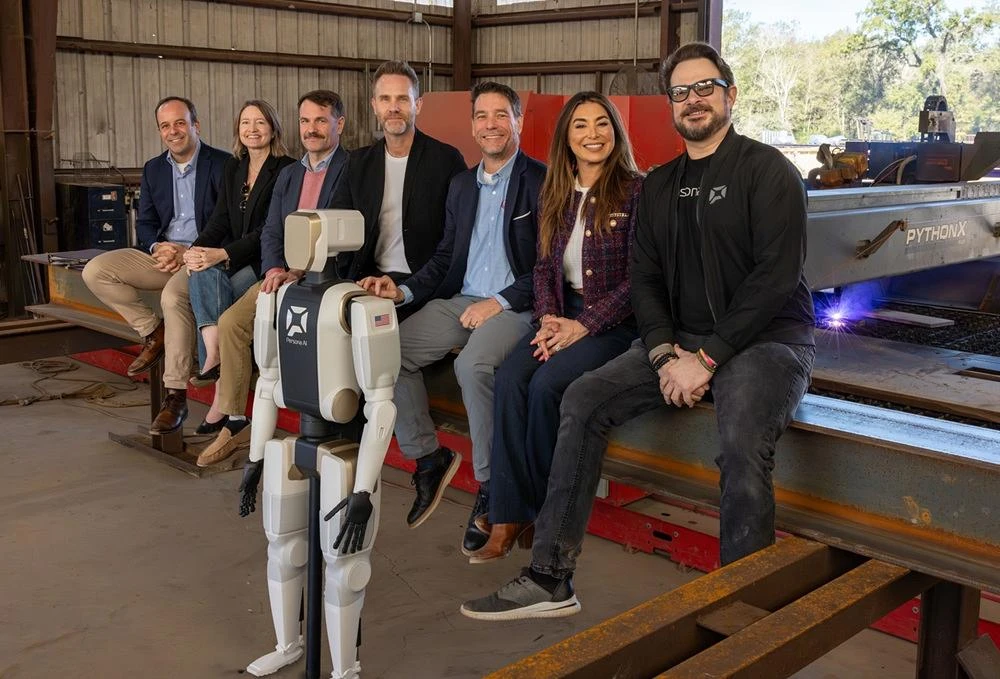
What a humanoid robot does in a fabrication shop
Dan Davis asked the question in The Fabricator in April (below). A structural steel shop in St. Bernard Parish is going to answer this question.
Everyone assumes the first task for a humanoid in a fab shop is welding. Justin Airhart, who runs the floor at SSE Steel Fabrication, puts it differently. A fitter is the golden child of this industry, and somebody who can fit material is harder to find than a welder. So the work he is interested in is fitting and tacking connection plates onto beams. Repetitive, physically punishing, and the bottleneck before any welding happens at all.
What a humanoid looks like in practice
Airhart describes a robot walking down a layout of ten beams with a hand held plasma torch, doing what a beamline does without any of the machine setup. It works from the original 3D files, and its vision system checks the cuts against the print as it goes. Beyond that, the list is ordinary shop work: deburring, sorting parts after cutting, moving material from one place to another.
SSE already has a PythonX beam processor and a recent fiber laser.
Fixed arms need guarding and a cell built around them. Cobots are safe to work beside but limited in what they can move and carry. What we are building takes the raw capability of an industrial manipulator and the safe to work around behaviour of a cobot, in a form that walks to the work rather than waiting for the work to come to it.
Why a small shop rather than a shipyard
SSE moves between 300 and 800 tons a month. That is nothing like the scale of a 50,000 person yard. A smaller floor with constantly changing work gives us far more opportunity to collect the data that trains the models, and it is a genuine proving ground rather than a controlled demonstration.
So how close is close
US manufacturing is not at the takeoff point on this yet. We have been building these robots for a long time and what has changed recently is that AI has made them useful, but useful is not the same as ready. At SSE the expectation is a robot on the floor within a couple of years, introduced gradually rather than all at once. Airhart’s view is that tomorrow arrives faster than people expect.
Read the full Fabricator article
Dan Davis went into more detail in The Fabricator, including what Airhart has been building himself with AI tools on the quality control side.
Read on The Fabricator